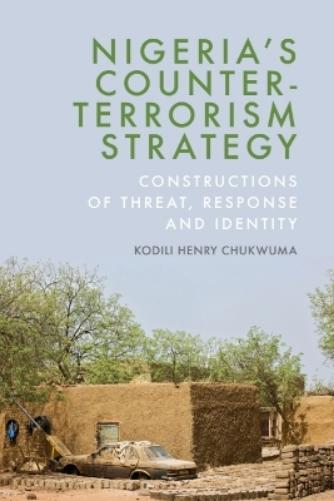
Nigeria’s Counter-Terrorism Strategy
Constructions of Threat, Response and Identity
Offers a critical examination of Nigeria’s counter-terrorism policy as a political activity of identity construction.
This book critically engages with Nigeria's counter-terrorism strategy as a means of identity construction. Drawing on a wealth of archival materials, Kodili Chukwuma analyses how the federal government articulates and justifies its counter-terrorism policy against specific ‘terrorist’ groups such as Boko Haram in order to construct Nigeria's identity. He argues that the designation of particular terrorist threats as a new form of terrorism in Nigeria – and beyond – enables state counter-terrorism interventions. Revealing the complexities of Nigeria's counter-terrorist strategy, this book sheds new light on critical terrorism and critical security studies in a key postcolonial context.
Nigeria’s Counter-Terrorism Strategy
Constructions of Threat, Response and Identity
Offers a critical examination of Nigeria’s counter-terrorism policy as a political activity of identity construction.
This book critically engages with Nigeria's counter-terrorism strategy as a means of identity construction. Drawing on a wealth of archival materials, Kodili Chukwuma analyses how the federal government articulates and justifies its counter-terrorism policy against specific ‘terrorist’ groups such as Boko Haram in order to construct Nigeria's identity. He argues that the designation of particular terrorist threats as a new form of terrorism in Nigeria – and beyond – enables state counter-terrorism interventions. Revealing the complexities of Nigeria's counter-terrorist strategy, this book sheds new light on critical terrorism and critical security studies in a key postcolonial context.
Product Information
Product Information
Shipping & Returns
Shipping & Returns
Description
Constructions of Threat, Response and Identity
Offers a critical examination of Nigeria’s counter-terrorism policy as a political activity of identity construction.
This book critically engages with Nigeria's counter-terrorism strategy as a means of identity construction. Drawing on a wealth of archival materials, Kodili Chukwuma analyses how the federal government articulates and justifies its counter-terrorism policy against specific ‘terrorist’ groups such as Boko Haram in order to construct Nigeria's identity. He argues that the designation of particular terrorist threats as a new form of terrorism in Nigeria – and beyond – enables state counter-terrorism interventions. Revealing the complexities of Nigeria's counter-terrorist strategy, this book sheds new light on critical terrorism and critical security studies in a key postcolonial context.