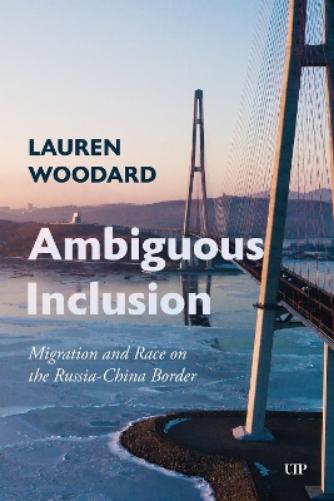
Ambiguous Inclusion
Migration and Race on the Russia-China Border Ambiguous Inclusion examines how migrants and state officials in Primorskii krai – Russia’s Far Eastern border with China and North Korea – draw on legacies of inclusion as migrants apply for Russian citizenship. Though many migrants from post-Soviet states obtain expedited citizenship due to shared language and Soviet ties, they often face exclusion in their everyday lives in Russia . Through ethnographic accounts, this book explores how Soviet ideals of internationalism and modern-day nationalism clash in everyday encounters between migrants and bureaucrats. Russia’s citizenship policies frame inclusion around Russian language and multiethnic unity, yet in practice often reinforce hierarchies linked to ethnicity and whiteness, even as race remains officially unacknowledged. Drawing on anthropologist Lauren Woodard’s 17 months of fieldwork, Ambiguous Inclusion reveals how officials reproduce xenophobia, even when they do not intend to, by transforming migrants into ‘compatriots.’ By tracing how inclusion is both granted and withheld, this book shows how inclusion and belonging operate alongside exclusion and discrimination in post-imperial contexts . It challenges conventional views of nation-states and migration, offering insights into the ways in which race, identity, and citizenship are negotiated in contemporary Russia.
Ambiguous Inclusion explores how Russian citizenship policies shape belonging, race, and identity for migrants along the country’s Asian borders.
Original: $112.13
-70%$112.13
$33.64Ambiguous Inclusion
Migration and Race on the Russia-China Border Ambiguous Inclusion examines how migrants and state officials in Primorskii krai – Russia’s Far Eastern border with China and North Korea – draw on legacies of inclusion as migrants apply for Russian citizenship. Though many migrants from post-Soviet states obtain expedited citizenship due to shared language and Soviet ties, they often face exclusion in their everyday lives in Russia . Through ethnographic accounts, this book explores how Soviet ideals of internationalism and modern-day nationalism clash in everyday encounters between migrants and bureaucrats. Russia’s citizenship policies frame inclusion around Russian language and multiethnic unity, yet in practice often reinforce hierarchies linked to ethnicity and whiteness, even as race remains officially unacknowledged. Drawing on anthropologist Lauren Woodard’s 17 months of fieldwork, Ambiguous Inclusion reveals how officials reproduce xenophobia, even when they do not intend to, by transforming migrants into ‘compatriots.’ By tracing how inclusion is both granted and withheld, this book shows how inclusion and belonging operate alongside exclusion and discrimination in post-imperial contexts . It challenges conventional views of nation-states and migration, offering insights into the ways in which race, identity, and citizenship are negotiated in contemporary Russia.
Ambiguous Inclusion explores how Russian citizenship policies shape belonging, race, and identity for migrants along the country’s Asian borders.
Product Information
Product Information
Shipping & Returns
Shipping & Returns
Description
Migration and Race on the Russia-China Border Ambiguous Inclusion examines how migrants and state officials in Primorskii krai – Russia’s Far Eastern border with China and North Korea – draw on legacies of inclusion as migrants apply for Russian citizenship. Though many migrants from post-Soviet states obtain expedited citizenship due to shared language and Soviet ties, they often face exclusion in their everyday lives in Russia . Through ethnographic accounts, this book explores how Soviet ideals of internationalism and modern-day nationalism clash in everyday encounters between migrants and bureaucrats. Russia’s citizenship policies frame inclusion around Russian language and multiethnic unity, yet in practice often reinforce hierarchies linked to ethnicity and whiteness, even as race remains officially unacknowledged. Drawing on anthropologist Lauren Woodard’s 17 months of fieldwork, Ambiguous Inclusion reveals how officials reproduce xenophobia, even when they do not intend to, by transforming migrants into ‘compatriots.’ By tracing how inclusion is both granted and withheld, this book shows how inclusion and belonging operate alongside exclusion and discrimination in post-imperial contexts . It challenges conventional views of nation-states and migration, offering insights into the ways in which race, identity, and citizenship are negotiated in contemporary Russia.
Ambiguous Inclusion explores how Russian citizenship policies shape belonging, race, and identity for migrants along the country’s Asian borders.