
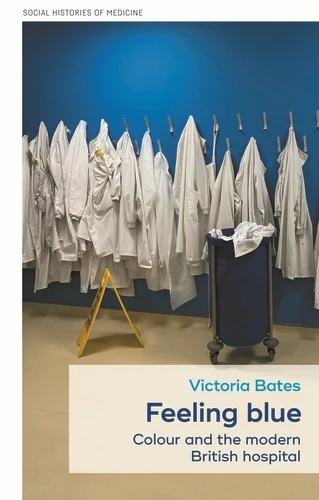
Feeling Blue
Colour and the Modern British Hospital
This book is the first historical study of colour in modern British hospitals, examining the use of colour to understand the layered meanings of modernity in twentieth-century Britain.
Feeling blue is the first book-length history of colour in modern hospitals. It examines colour in relation to six key themes – hygiene, emotion, humanisation, homeliness, play, consumerism – which are tied together by the idea of the ‘modern’ hospital. The book does not simply describe changes to the appearance of hospitals over time, but instead thinks expansively about the role of colour in shaping how hospitals felt. It uses colour to understand the layered meanings of modernity in twentieth-century Britain, and its relationship to the ‘mundane’ or everyday life of hospitals.
Feeling Blue
Colour and the Modern British Hospital
This book is the first historical study of colour in modern British hospitals, examining the use of colour to understand the layered meanings of modernity in twentieth-century Britain.
Feeling blue is the first book-length history of colour in modern hospitals. It examines colour in relation to six key themes – hygiene, emotion, humanisation, homeliness, play, consumerism – which are tied together by the idea of the ‘modern’ hospital. The book does not simply describe changes to the appearance of hospitals over time, but instead thinks expansively about the role of colour in shaping how hospitals felt. It uses colour to understand the layered meanings of modernity in twentieth-century Britain, and its relationship to the ‘mundane’ or everyday life of hospitals.
Product Information
Product Information
Shipping & Returns
Shipping & Returns
Description
Colour and the Modern British Hospital
This book is the first historical study of colour in modern British hospitals, examining the use of colour to understand the layered meanings of modernity in twentieth-century Britain.
Feeling blue is the first book-length history of colour in modern hospitals. It examines colour in relation to six key themes – hygiene, emotion, humanisation, homeliness, play, consumerism – which are tied together by the idea of the ‘modern’ hospital. The book does not simply describe changes to the appearance of hospitals over time, but instead thinks expansively about the role of colour in shaping how hospitals felt. It uses colour to understand the layered meanings of modernity in twentieth-century Britain, and its relationship to the ‘mundane’ or everyday life of hospitals.