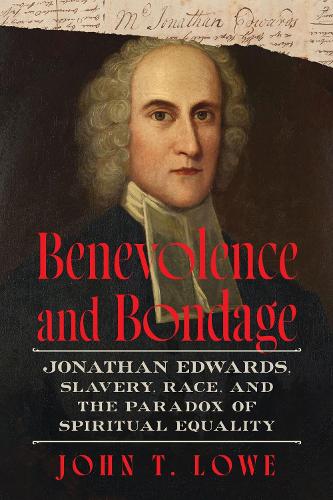
Benevolence and Bondage
Jonathan Edwards, Slavery, Race, and the Paradox of Spiritual Equality How Jonathan Edwards's theology of equality laid foundations for early American abolitionism In this groundbreaking book, John T. Lowe reexamines Jonathan Edwards's legacy by focusing on the intersections among slavery, race, and theology. Connecting seemingly disparate aspects of Edwards's life and thought, Lowe offers a powerful new interpretation of one of America's most influential theologians. While Edwards was himself an enslaver, his theological writings—especially his concept of "civil-spiritual dualism"—provided impetus for some of his followers to embrace abolitionism. Through close analysis of sermons, letters, and personal writings, Lowe reveals the tensions and transformations within Edwards's thought. The theological, social, and political implications of this revivalist preacher's private and public ideas extended beyond New England and shaped debates across the early American republic. Benevolence and Bondage challenges familiar narratives about Edwardsean thought and the theological roots of the antislavery movement. Lowe clarifies Edwards's theological position and reframes how religious ideas both supported and disrupted slavery. Bridging history and theology, Lowe contributes significantly to the Edwards renaissance and confronts uncomfortable truths at the heart of the American colonial project.
Original: $54.95
-70%$54.95
$16.48Benevolence and Bondage
Jonathan Edwards, Slavery, Race, and the Paradox of Spiritual Equality How Jonathan Edwards's theology of equality laid foundations for early American abolitionism In this groundbreaking book, John T. Lowe reexamines Jonathan Edwards's legacy by focusing on the intersections among slavery, race, and theology. Connecting seemingly disparate aspects of Edwards's life and thought, Lowe offers a powerful new interpretation of one of America's most influential theologians. While Edwards was himself an enslaver, his theological writings—especially his concept of "civil-spiritual dualism"—provided impetus for some of his followers to embrace abolitionism. Through close analysis of sermons, letters, and personal writings, Lowe reveals the tensions and transformations within Edwards's thought. The theological, social, and political implications of this revivalist preacher's private and public ideas extended beyond New England and shaped debates across the early American republic. Benevolence and Bondage challenges familiar narratives about Edwardsean thought and the theological roots of the antislavery movement. Lowe clarifies Edwards's theological position and reframes how religious ideas both supported and disrupted slavery. Bridging history and theology, Lowe contributes significantly to the Edwards renaissance and confronts uncomfortable truths at the heart of the American colonial project.
Product Information
Product Information
Shipping & Returns
Shipping & Returns
Description
Jonathan Edwards, Slavery, Race, and the Paradox of Spiritual Equality How Jonathan Edwards's theology of equality laid foundations for early American abolitionism In this groundbreaking book, John T. Lowe reexamines Jonathan Edwards's legacy by focusing on the intersections among slavery, race, and theology. Connecting seemingly disparate aspects of Edwards's life and thought, Lowe offers a powerful new interpretation of one of America's most influential theologians. While Edwards was himself an enslaver, his theological writings—especially his concept of "civil-spiritual dualism"—provided impetus for some of his followers to embrace abolitionism. Through close analysis of sermons, letters, and personal writings, Lowe reveals the tensions and transformations within Edwards's thought. The theological, social, and political implications of this revivalist preacher's private and public ideas extended beyond New England and shaped debates across the early American republic. Benevolence and Bondage challenges familiar narratives about Edwardsean thought and the theological roots of the antislavery movement. Lowe clarifies Edwards's theological position and reframes how religious ideas both supported and disrupted slavery. Bridging history and theology, Lowe contributes significantly to the Edwards renaissance and confronts uncomfortable truths at the heart of the American colonial project.