
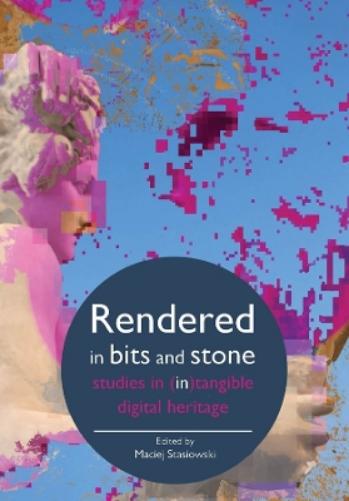
Rendered in Bits and Stone
Studies in (In)Tangible Digital Heritage The book provides a cross disciplinary examination of digital reconstruction projects and innovations in the field of immersive exhibitions, looking into the ‘digital politics of conservation’; technologies that augment storytelling’; and digital technologies considered tools for creating ‘virtual models of the past’. The field of digital heritage, definable in the most elementary terms as the application of digital technologies to the practices of conservation and heritage practices, has exploded in recent years.
Today it is typical to see 3D modelling, augmented reality, virtual tours and mobile apps as part and parcel of the heritage sector in a whole variety of ways. This has been reflected in academia with a growing number of conferences and publications dedicated to these questions.
The objective of this book is to offer an interdisciplinary examination of such practices which, it is expected, will reveal more of the nuances, interplays and a wider range of interests than is found in the current literature. To that end, the book offers chapters from international scholars in several disciplines: architectural conservation, archaeology, cultural tourism, urban studies and photography; heritage, film, game, museal studies, and scenography.
Their work deals with three broad areas of activity in the digital heritage field that this book defines as the ‘digital politics of conservation’; technology as a heritage ‘storytelling’ device; and digital technologies as tools to create ‘virtual models of the past’.
Original: $319.06
-70%$319.06
$95.72Rendered in Bits and Stone
Studies in (In)Tangible Digital Heritage The book provides a cross disciplinary examination of digital reconstruction projects and innovations in the field of immersive exhibitions, looking into the ‘digital politics of conservation’; technologies that augment storytelling’; and digital technologies considered tools for creating ‘virtual models of the past’. The field of digital heritage, definable in the most elementary terms as the application of digital technologies to the practices of conservation and heritage practices, has exploded in recent years.
Today it is typical to see 3D modelling, augmented reality, virtual tours and mobile apps as part and parcel of the heritage sector in a whole variety of ways. This has been reflected in academia with a growing number of conferences and publications dedicated to these questions.
The objective of this book is to offer an interdisciplinary examination of such practices which, it is expected, will reveal more of the nuances, interplays and a wider range of interests than is found in the current literature. To that end, the book offers chapters from international scholars in several disciplines: architectural conservation, archaeology, cultural tourism, urban studies and photography; heritage, film, game, museal studies, and scenography.
Their work deals with three broad areas of activity in the digital heritage field that this book defines as the ‘digital politics of conservation’; technology as a heritage ‘storytelling’ device; and digital technologies as tools to create ‘virtual models of the past’.
Product Information
Product Information
Shipping & Returns
Shipping & Returns
Description
Studies in (In)Tangible Digital Heritage The book provides a cross disciplinary examination of digital reconstruction projects and innovations in the field of immersive exhibitions, looking into the ‘digital politics of conservation’; technologies that augment storytelling’; and digital technologies considered tools for creating ‘virtual models of the past’. The field of digital heritage, definable in the most elementary terms as the application of digital technologies to the practices of conservation and heritage practices, has exploded in recent years.
Today it is typical to see 3D modelling, augmented reality, virtual tours and mobile apps as part and parcel of the heritage sector in a whole variety of ways. This has been reflected in academia with a growing number of conferences and publications dedicated to these questions.
The objective of this book is to offer an interdisciplinary examination of such practices which, it is expected, will reveal more of the nuances, interplays and a wider range of interests than is found in the current literature. To that end, the book offers chapters from international scholars in several disciplines: architectural conservation, archaeology, cultural tourism, urban studies and photography; heritage, film, game, museal studies, and scenography.
Their work deals with three broad areas of activity in the digital heritage field that this book defines as the ‘digital politics of conservation’; technology as a heritage ‘storytelling’ device; and digital technologies as tools to create ‘virtual models of the past’.